

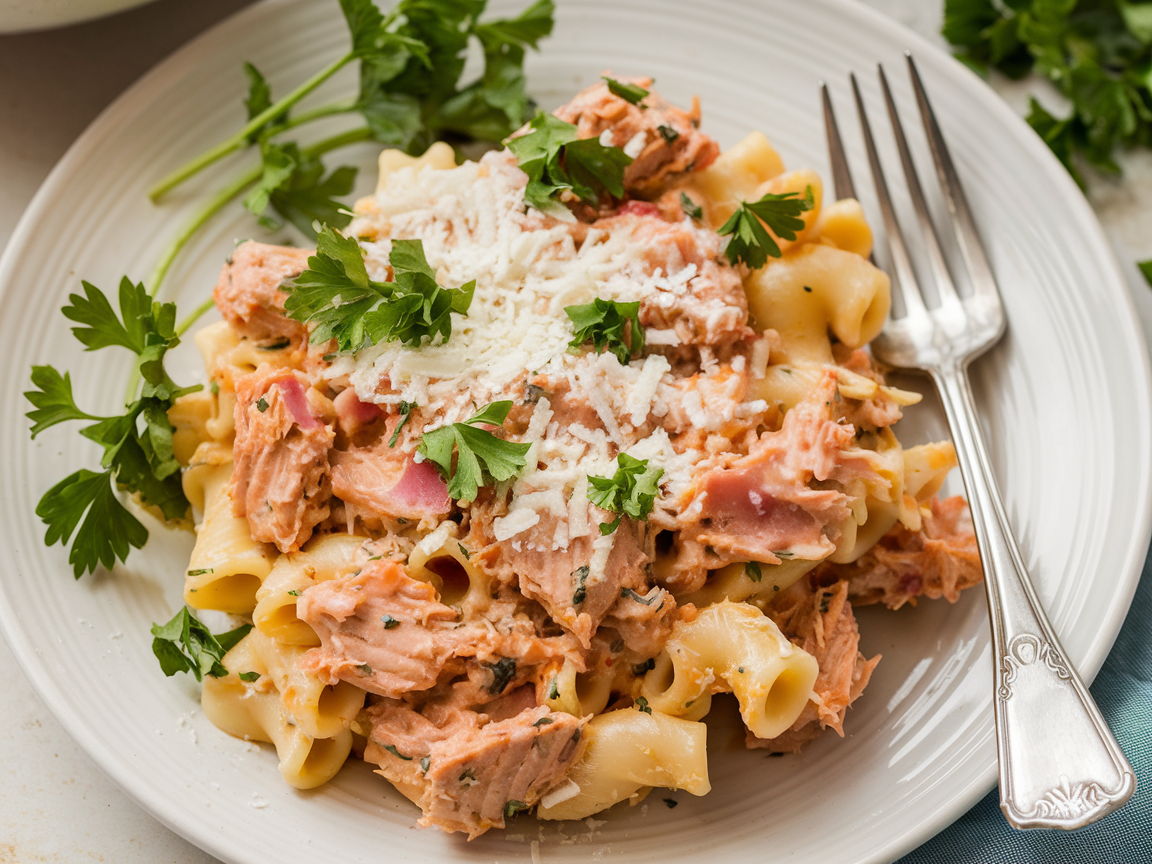
A creamy tuna pasta bake is a straightforward casserole that combines soft pasta, canned tuna, and a rich cream sauce topped with melted cheese. This baked tuna pasta recipe delivers comfort food satisfaction in under an hour with minimal ingredients and effort. Perfect for weeknight dinners, this tuna pasta dish feeds a family of four and requires no advanced cooking skills.
Table of Contents
| Prep Time | Cook Time | Total Time | Servings | Difficulty | Cuisine |
|---|---|---|---|---|---|
| 10 minutes | 30 minutes | 40 minutes | 4 servings | Easy | American |
Why This Recipe Works
I’ve made this creamy tuna noodle bake dozens of times because it consistently delivers restaurant-quality results with grocery store basics. The combination of canned tuna and cream creates a naturally rich sauce that coats every noodle without requiring complicated roux or béchamel techniques. This easy tuna pasta casserole comes together in minutes, making it my go-to solution when I need dinner on the table fast.
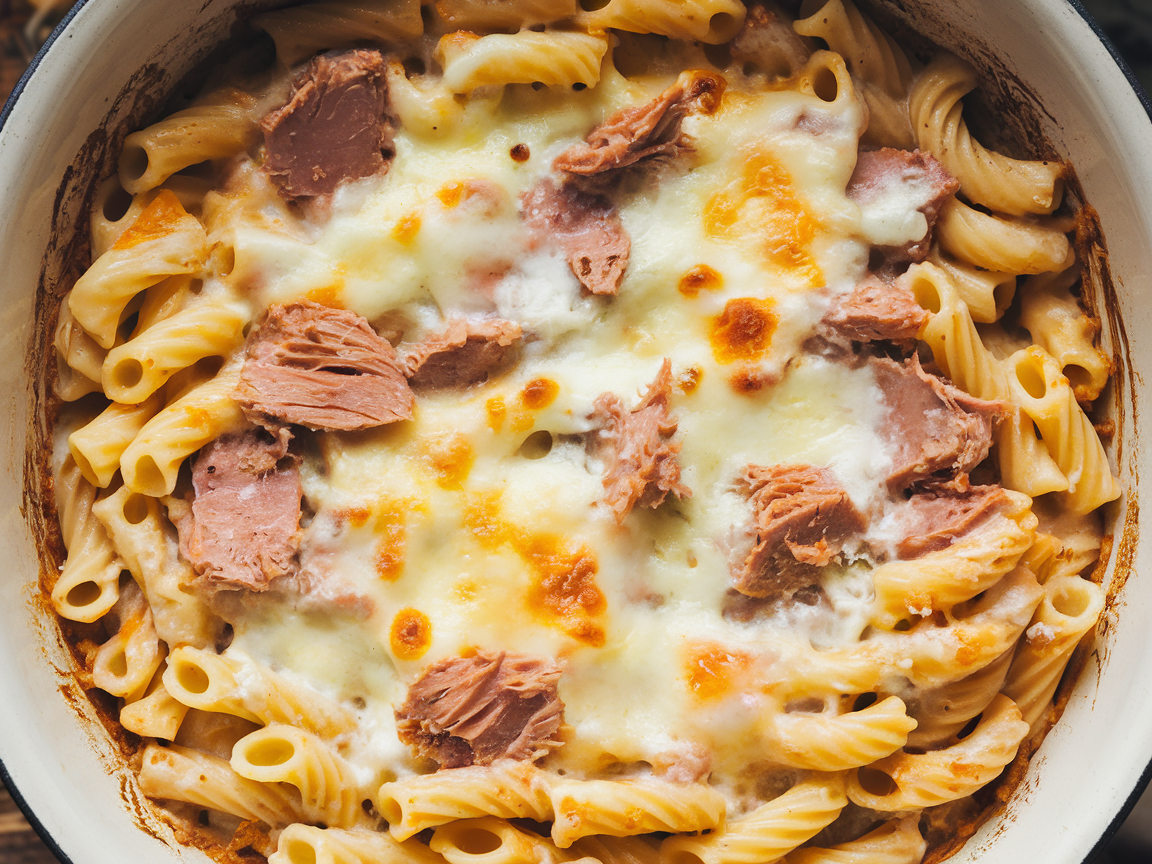
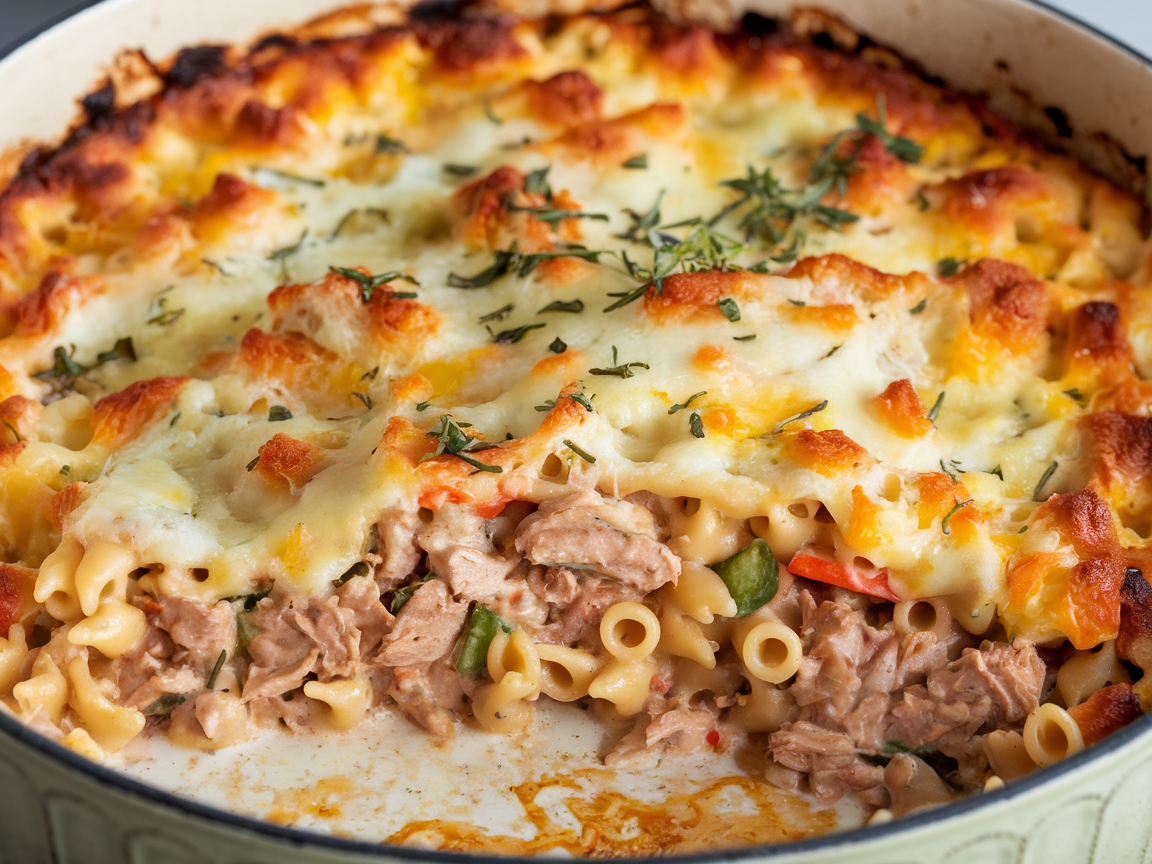
The baking step transforms this into something special—the heat melts the cheese topping into a golden crust while the cream sauce bubbles around the edges and infuses the pasta completely. My family requests this tuna pasta casserole regularly because it’s genuinely satisfying without feeling heavy. The peas add subtle sweetness and texture that prevents the dish from becoming monotonous.
What I love most about this seafood pasta bake is its flexibility and reliability. You can prepare it entirely ahead of time and bake it fresh when needed, or serve it immediately after mixing. The recipe never disappoints, whether I’m cooking for my immediate family or hosting a casual dinner party.
Ingredients
| Ingredient | Quantity | Notes & Alternatives |
|---|---|---|
| Pasta | 300g | Use penne, rigatoni, or fusilli for best sauce adhesion. Whole wheat pasta works equally well. |
| Canned tuna | 1 can (185g) | Choose oil-packed or water-packed based on preference. Drain thoroughly before mixing. Fresh cooked tuna works but adds cost. |
| Cream | 1 cup (240ml) | Heavy cream, sour cream, or Greek yogurt all work. Greek yogurt creates a slightly tangier version. |
| Cheese | 1 cup (100g) | Sharp cheddar, mozzarella, or a blend work best. Pre-grated saves time but freshly grated melts more smoothly. |
| Frozen peas | ½ cup (60g) | Fresh or canned peas are acceptable. Thaw frozen peas slightly before mixing to distribute evenly. |
| Salt | To taste | Start with ½ teaspoon and adjust after tasting. Canned tuna adds inherent saltiness. |
| Black pepper | To taste | Freshly ground pepper adds more flavor than pre-ground. Begin with ¼ teaspoon. |
Step-by-Step Instructions
Preparation Phase
- Cook pasta in salted boiling water according to package directions until al dente, then drain completely and set aside.
- Preheat your oven to 180°C (350°F) while the pasta cooks to ensure proper baking temperature.
- Drain the canned tuna thoroughly in a fine-mesh strainer, pressing gently to remove excess liquid.
Mixing Phase
- Combine drained tuna, cream, frozen peas, salt, and pepper in a large mixing bowl and stir until evenly blended.
- Add the cooked pasta to the tuna mixture and fold gently until every piece of pasta is coated with sauce.
Baking Phase
- Pour the combined pasta mixture into a lightly greased baking dish, spreading it in an even layer.
- Distribute the grated cheese evenly across the entire surface of the pasta.
- Bake at 180°C for 20 to 25 minutes until the cheese melts completely and turns golden brown at the edges.
- Remove from the oven and let rest for 3 minutes before serving to allow the sauce to set slightly.
Chef Tips for Perfect Results
- Drain your canned tuna very thoroughly by pressing it against the strainer with the back of a spoon, removing excess liquid that would dilute your cream sauce.
- Do not overcook the pasta before baking because it will continue cooking in the oven and become mushy if started at al dente.
- Use freshly grated cheese instead of pre-shredded varieties, as shredded cheese contains anti-caking agents that prevent smooth melting.
- Let the baked dish rest for exactly three minutes after removing from the oven—this allows the cream to thicken and makes serving cleaner.
- Taste the tuna mixture before baking and adjust seasoning aggressively, as flavors become muted during the baking process.
- Cover the dish with foil during the first 15 minutes if your cheese begins browning too quickly, then uncover to finish.
Common Mistakes to Avoid
Overcooking the pasta initially: Many home cooks cook pasta until completely tender, then bake it, resulting in mushy texture. Fix this by cooking pasta only to al dente stage—it should have slight resistance when bitten.
Insufficient draining of tuna: Excess liquid from the can dilutes your cream sauce and creates a watery baked dish. Always press tuna firmly in a strainer for at least 30 seconds before opening to the mixture.
Skipping the resting period: Removing the dish and serving immediately makes the sauce seem too thin when it actually needs three minutes to set. This short rest dramatically improves both texture and presentation.
Using low-fat cream: While tempting for health reasons, low-fat versions contain stabilizers that prevent proper thickening during baking. Standard heavy cream or full-fat sour cream produces the best creamy tuna pasta bake results.
Uneven cheese distribution: Piling cheese in the center leaves the edges of this creamy pasta tuna casserole without topping. Spread cheese from the edges first, working toward the center for complete coverage.
Variations and Substitutions
| Original Ingredient | Substitution | Impact on Flavor |
|---|---|---|
| Canned tuna | Canned salmon or cooked fresh white fish | Creates milder, more delicate seafood flavor profile. |
| Frozen peas | Corn, diced bell peppers, or sun-dried tomatoes | Adds different sweetness levels and texture variations. |
| Heavy cream | Evaporated milk or full-fat Greek yogurt | Creates slightly less rich sauce with tangier undertones. |
| Cheddar cheese | Gruyère, fontina, or Swiss cheese | Produces more complex, nutty flavor in the golden topping. |
| Plain pasta | Whole wheat, spinach, or chickpea pasta | Increases nutritional content without altering core flavor. |
Serving Suggestions and Pairings
Serve this tuna noodle bake alongside a crisp green salad dressed with lemon vinaigrette to cut through the richness of the cream sauce. Garlic bread or crusty sourdough toast are excellent companions that soak up excess sauce and complete the meal. For a lighter option, pair with roasted vegetables like broccoli or asparagus prepared with olive oil and lemon.
This baked pasta with tuna works beautifully for casual family dinners, packed lunches, and potluck gatherings where the dish travels well in its baking vessel. Serve directly from the baking dish to maintain temperature and simplify cleanup. Add a sprinkle of fresh parsley or chives just before serving for color and fresh herb flavor that complements the creamy tuna casserole nicely.
Storage and Reheating
| Method | Duration | Instructions |
|---|---|---|
| Refrigerator (covered) | 3–4 days | Allow casserole to cool completely before covering with plastic wrap or foil. Store directly in baking dish if space permits. |
| Freezer (covered) | 2–3 months | Cool completely, cover tightly with plastic wrap and foil, label with date. Freeze in baking dish for easier thawing. |
| Oven reheating | 25–30 minutes | Thaw overnight in refrigerator. Cover with foil and reheat at 160°C until heated through. Add a splash of cream if sauce appears dry. |
| Microwave reheating | 3–5 minutes | Transfer portion to microwave-safe dish, cover loosely with paper towel, heat at 50% power stirring halfway through. |
| Stovetop reheating | 8–10 minutes | Place in large skillet over low heat, stirring occasionally and adding splash of cream or milk if needed to restore moisture. |
Nutritional Information
The following values are approximate per serving based on a four-serving yield using standard ingredients.
| Nutrient | Amount per Serving |
|---|---|
| Calories | 485 kcal |
| Protein | 28g |
| Fat | 22g |
| Carbohydrates | 42g |
| Fiber | 3g |
| Sugar | 2g |
| Sodium | 620mg |
Frequently Asked Questions
Can I make this creamy tuna pasta bake ahead of time?
Yes, you can assemble the entire dish up to 24 hours in advance and refrigerate before baking. Mix all ingredients except the cheese topping, place in the baking dish, cover with plastic wrap, and store in the refrigerator. Add cheese and bake fresh from cold, adding 5 extra minutes to the baking time. This make-ahead capability makes the dish perfect for busy weekdays.
What’s the best way to know when the tuna pasta casserole is done baking?
The casserole is finished when the cheese topping turns golden brown and the edges bubble visibly for at least one minute. The internal temperature should reach 70°C if measured with an instant-read thermometer. Do not overbake beyond 25 minutes, as the edges will dry out while the center remains perfect.
How do I fix a watery baked tuna pasta recipe?
Watery texture typically results from insufficient tuna draining or overcooking the pasta initially. To rescue an already-baked dish, mix one tablespoon of cornstarch with two tablespoons of cold water, stir into the warm casserole, and bake five additional minutes to thicken the sauce. Prevent this by draining tuna thoroughly and cooking pasta to only al dente stage.
Is this seafood pasta bake suitable for freezing?
Absolutely, this dish freezes beautifully for up to three months when properly wrapped. Freeze the unbaked assembled casserole for best results, allowing you to bake straight from frozen—just add 10 extra minutes to cooking time. Alternatively, freeze the baked dish and reheat gently in a 160°C oven covered with foil until heated through.
What cream alternative works best for a dairy-free tuna pasta bake?
Full-fat coconut cream or oat-based heavy cream produces the most similar results to dairy cream in this baked tuna pasta recipe. Cashew cream made from soaked raw cashews blended with water creates richness and texture comparable to traditional cream. Avoid low-fat alternatives regardless of dairy status, as they contain additives that prevent proper thickening during baking.
Creamy Tuna Pasta Bake
Equipment
- Large Pot
- Mixing Bowl
- Baking Dish
Ingredients
Main
- 300 g pasta penne, rigatoni, or fusilli
- 1 can tuna 185g, drained
- 1 cup cream
- 1 cup cheese grated
- 1/2 cup peas frozen or fresh
- salt to taste
- black pepper to taste
Instructions
- Cook pasta in salted boiling water until al dente. Drain and set aside.
- Preheat oven to 180°C (350°F).
- Drain tuna thoroughly and combine with cream, peas, salt, and pepper in a large bowl.
- Add cooked pasta and mix gently until evenly coated.
- Transfer mixture to a greased baking dish and spread evenly.
- Top with grated cheese and bake for 20–25 minutes until golden and bubbling.
- Let rest for a few minutes before serving.
Notes
Conclusion
This creamy tuna pasta bake stands as the ultimate comfort food solution for families seeking reliable, delicious meals with minimal effort. The combination of tender pasta, flaky canned tuna, and rich cream sauce topped with melted cheese delivers satisfaction that homemade cooking promises. Make this tuna noodle bake tonight and discover why it remains a timeless favorite at dinner tables everywhere.
Sources: