

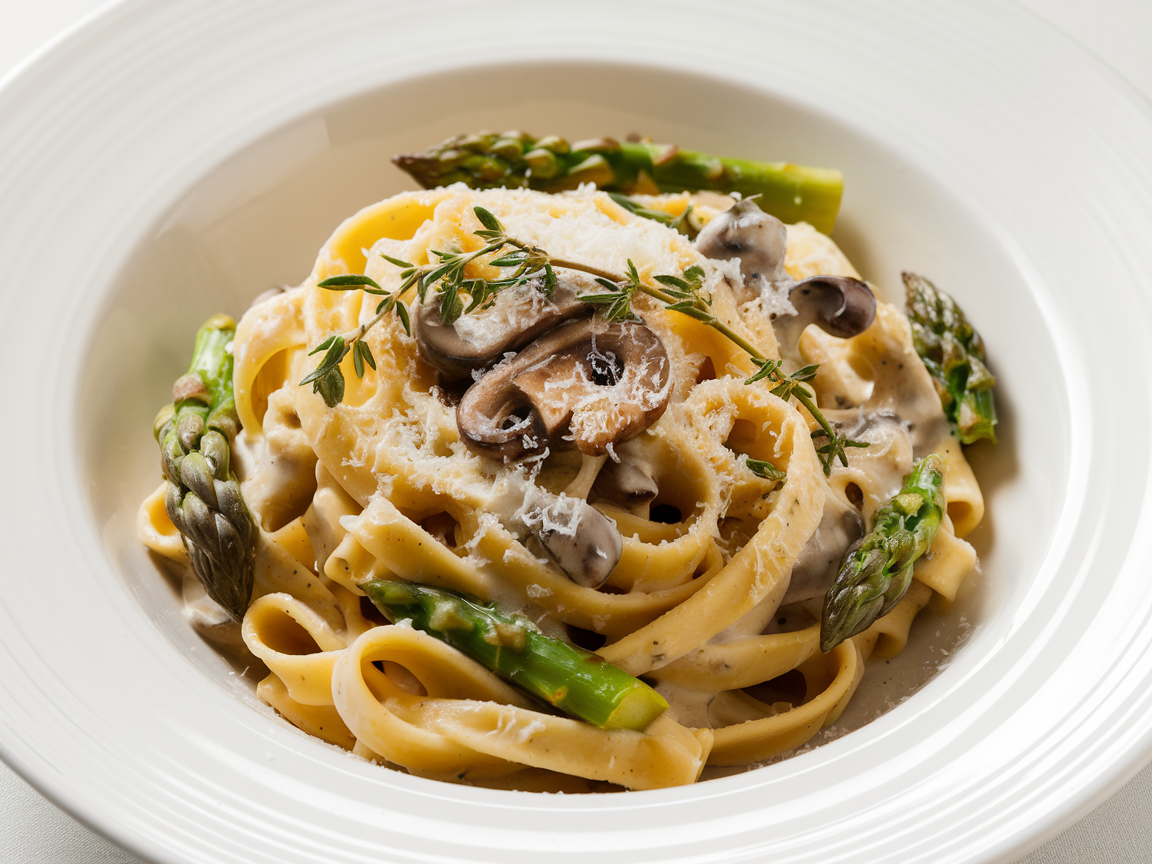
Asparagus and mushroom tagliatelle is an elegant vegetarian pasta dish combining tender ribbons of fresh tagliatelle with sautéed mushrooms, crisp asparagus tips, and a silky cream sauce. This seasonal vegetable pasta delivers earthy mushroom flavors and bright spring freshness in every forkful. The creamy mushroom asparagus sauce clings beautifully to al dente pasta, creating a restaurant-quality dinner ready in under thirty minutes.
Table of Contents
| Detail | Value |
|---|---|
| Prep Time | 10 minutes |
| Cook Time | 15 minutes |
| Total Time | 25 minutes |
| Servings | 4 |
| Difficulty | Easy |
| Cuisine | Italian |
Why This Recipe Works
I’ve prepared this asparagus mushroom pasta recipe dozens of times, and it consistently delivers impressive results with minimal effort. The combination of sautéed mushrooms and fresh asparagus creates a naturally balanced dish without heavy cream overwhelming delicate vegetable flavors. The white wine deglazing step adds complexity while the Parmesan brings umami depth that transforms simple ingredients into something special.
What makes this Italian tagliatelle dish remarkable is the textural contrast between tender asparagus tips and earthy mushroom pieces. The mushrooms release their moisture during cooking, creating a flavorful base for the cream sauce that clings perfectly to fresh pasta ribbons. I’ve found that maintaining crisp asparagus while building a rich sauce is the key to success with this vegetarian pasta dinner.
The timing works beautifully because pasta cooks in roughly the same duration as your vegetables soften. This synchronization means everything reaches the plate hot and properly cooked, with nothing languishing under heat that compromises texture or flavor quality.
Ingredients
| Ingredient | Quantity | Notes and Alternatives |
|---|---|---|
| Tagliatelle pasta | 400g | Use fresh egg tagliatelle for best results; dried works but lacks richness. Substitute fettuccine if preferred. |
| Olive oil | 2 tablespoons | Extra virgin olive oil adds better flavor than light varieties. Essential for sautéing. |
| Mushrooms, sliced | 1 cup | Baby bella, cremini, or button mushrooms work well. Cremini provides earthier flavor and deeper color. |
| Asparagus tips | 1 cup | Fresh, thin to medium asparagus works best. Frozen asparagus acceptable but won’t maintain crispness. |
| White wine | 1/2 cup | Use a dry white like Pinot Grigio or Sauvignon Blanc. Vegetable broth works as alcohol-free option. |
| Cream | 1/2 cup | Heavy cream recommended; half-and-half lighter option. Crème fraîche adds tang and richness. |
| Parmesan cheese | 1/4 cup | Freshly grated provides superior melting and flavor versus pre-grated varieties with anti-caking agents. |
| Fresh thyme | 1 teaspoon | Fresh is preferable; use 1/3 teaspoon dried if necessary. Oregano provides Mediterranean alternative. |
| Salt and pepper | To taste | Add salt gradually; Parmesan contributes saltiness. Freshly cracked pepper provides better flavor than pre-ground. |
Step-by-Step Instructions
Pasta Preparation Phase
- Bring a large pot of salted water to a rolling boil, ensuring water is well-seasoned like sea water.
- Add 400g tagliatelle pasta and cook according to package directions until al dente pasta texture is achieved.
- Reserve 1 cup pasta water before draining the cooked tagliatelle completely in a colander.
Vegetable Cooking Phase
- Heat 2 tablespoons olive oil in a large skillet over medium-high heat until shimmering, about one minute.
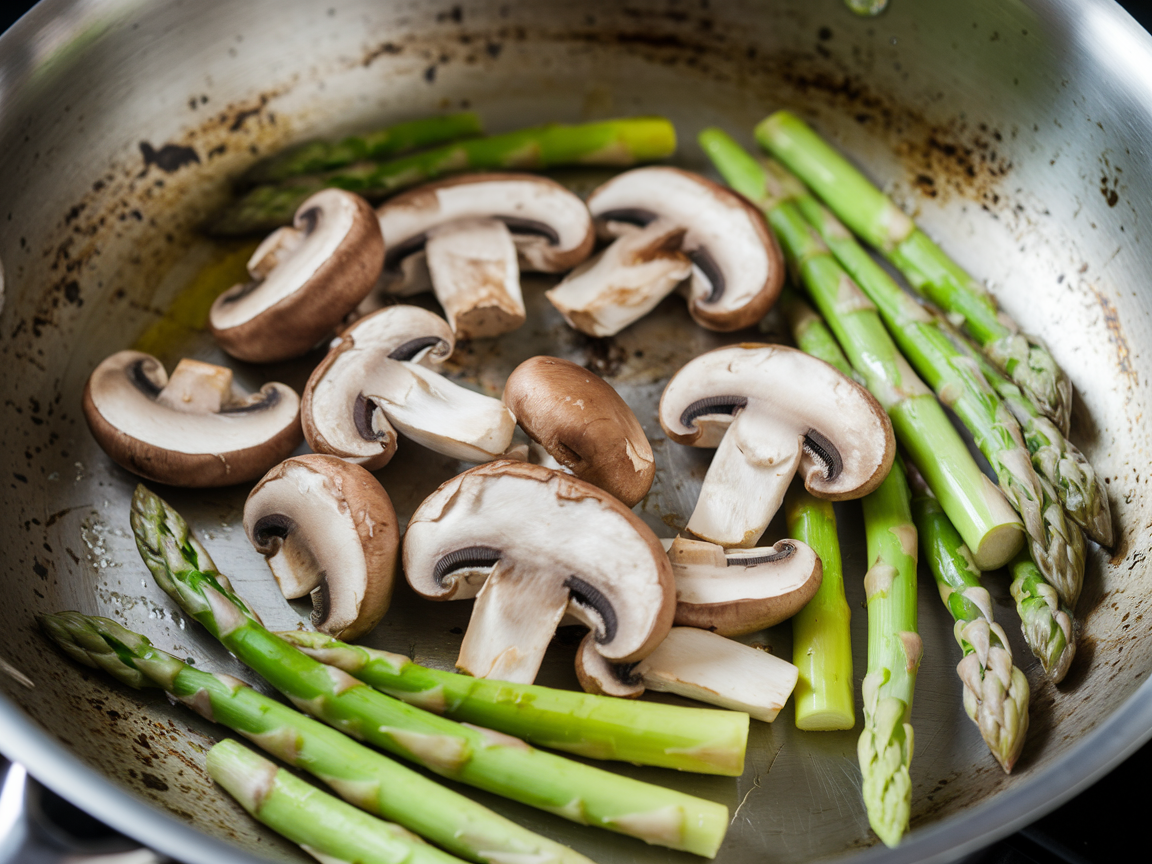
- Add sliced mushrooms in a single layer and let them cook undisturbed for three minutes until golden brown.
- Stir the sautéed mushrooms and cook another two minutes until golden brown and moisture evaporates.
- Add 1 cup asparagus tips and cook briefly for two minutes, maintaining crispness and bright green color.
Sauce Building Phase
- Deglaze the pan with 1/2 cup white wine, scraping up browned bits from the skillet bottom with a wooden spoon.
- Allow the wine to reduce by half, concentrating flavors over two to three minutes of gentle simmering.
- Reduce heat to medium-low and stir in 1/2 cup cream, combining thoroughly with vegetable and pan juices.
- Add 1/4 cup freshly grated Parmesan cheese, stirring constantly until a smooth creamy mushroom asparagus sauce forms.
Final Assembly Phase
- Combine drained tender asparagus ribbons with the creamy sauce, tossing gently to coat all pasta evenly.
- Add reserved pasta water one tablespoon at a time if sauce seems too thick, creating silky consistency.
- Season with fresh thyme, salt, and pepper to taste, stirring to distribute seasonings uniformly throughout.
- Serve hot immediately in shallow bowls, allowing the earthy mushroom flavors and spring freshness to shine.
Chef Tips for Perfect Results
- Slice mushrooms uniformly to ensure even cooking and prevent some pieces from burning while others remain raw or undercooked.
- Use fresh thyme sprigs for the best flavor; dried thyme lacks the aromatic oils that make this dish memorable and spring-forward.
- Don’t skip the pasta water reservation; this starch helps emulsify the sauce and creates silky coating on tender asparagus ribbons.
- Add cream gradually after the wine reduction to prevent curdling or breaking the sauce with temperature shock.
- Grate Parmesan fresh immediately before adding to ensure melting smoothly without clumping from moisture in pre-grated varieties.
- Keep asparagus tips separate initially and add them late so they maintain crispness rather than becoming mushy in the sauce.
Common Mistakes to Avoid
Overcooking Asparagus: Many home cooks add asparagus too early, resulting in mushy, discolored pieces that lose their signature crunch. Add asparagus tips only after mushrooms are nearly done, cooking them for just two minutes to maintain bright color and tender-crisp texture that defines quality spring pasta.
Skipping the Wine Reduction: Raw wine flavor overpowers delicate vegetables if you don’t allow it to reduce and concentrate. Always let wine simmer for two to three minutes, allowing alcohol to evaporate and flavors to intensify before adding cream.
Using Pre-Grated Parmesan: Anti-caking agents in pre-grated cheese prevent proper melting and create grainy sauce texture instead of smooth creaminess. Grate Parmesan fresh immediately before use, allowing the natural starches to emulsify properly with the cream sauce.
Adding Cream Too Quickly: Pouring cold cream into a hot pan can break the sauce or create a grainy, separated texture that looks unappetizing. Reduce heat to medium-low and pour cream gradually while stirring constantly to maintain emulsification.
Not Reserving Pasta Water: Draining pasta without saving starchy water leaves you unable to adjust sauce consistency if it becomes too thick. Always reserve at least one cup pasta water before draining, using it tablespoon by tablespoon to achieve silky consistency.
Variations and Substitutions
| Ingredient | Substitution | Impact on Flavor |
|---|---|---|
| White wine | Vegetable or chicken broth | Loses wine acidity but maintains umami; more savory, less bright character. |
| Cream | Half-and-half or Greek yogurt | Lighter result; yogurt adds tanginess that brightens earthy mushroom flavors slightly. |
| Button mushrooms | Cremini, oyster, or porcini | Cremini adds deeper earthiness; oyster brings delicate sweetness; porcini intensifies umami dramatically. |
| Fresh thyme | Oregano, sage, or tarragon | Oregano maintains Mediterranean character; sage adds warmth; tarragon introduces subtle anise notes. |
| Tagliatelle | Fettuccine, pappardelle, or linguine | Wider pappardelle catches more sauce; linguine creates lighter feel; shape change minimal impact on overall dish. |
| Parmesan | Pecorino Romano or Gruyère | Pecorino adds sharper, saltier profile; Gruyère introduces nuttiness that complements mushrooms beautifully. |
Serving Suggestions and Pairings
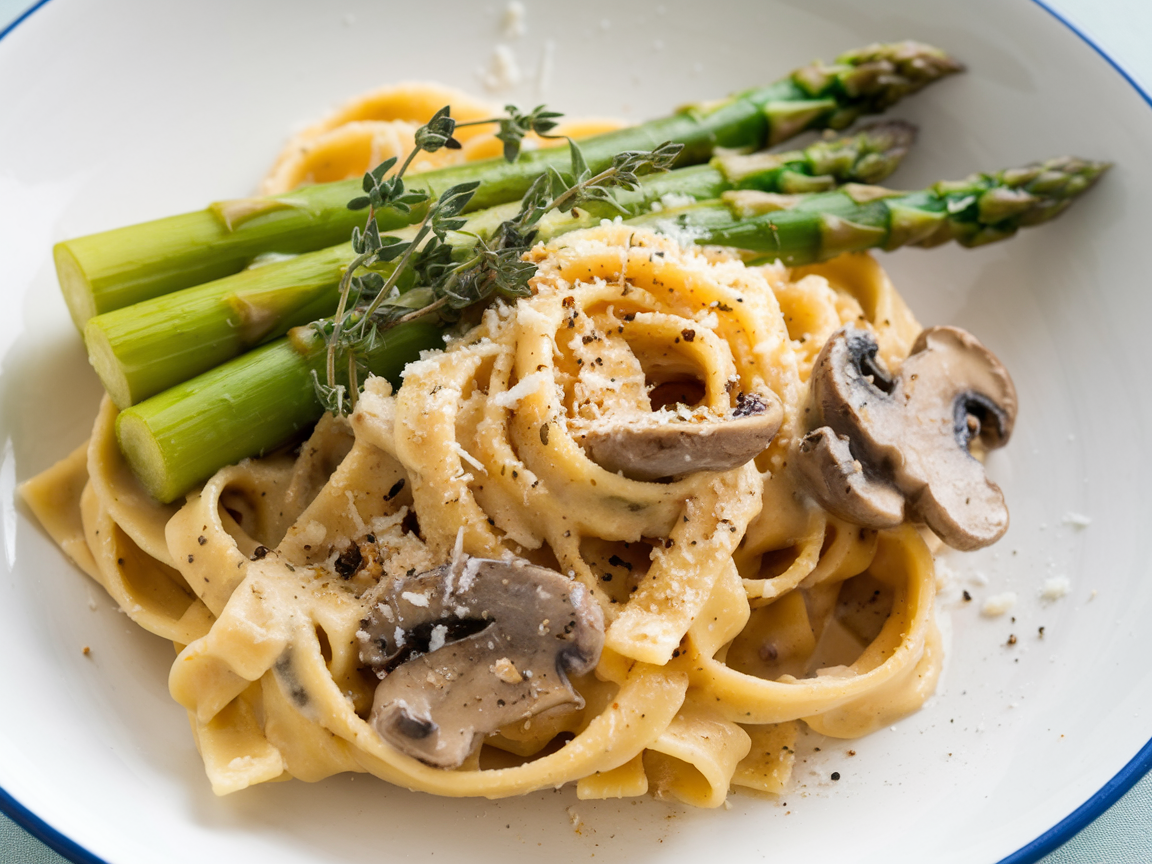
Serve this asparagus mushroom pasta recipe as the star of an elegant dinner party or casual weeknight meal that satisfies vegetarians and omnivores alike. Pair with a crisp Pinot Grigio or Sauvignon Blanc that echoes the white wine in the sauce and cuts through cream richness beautifully.
Add a simple arugula salad dressed with lemon vinaigrette to brighten the plate and provide peppery contrast to earthy mushroom flavors. Fresh crusty bread works wonderfully for sopping up remaining creamy mushroom asparagus sauce, making cleanup easier and meals more memorable.
For spring entertaining, serve this Italian tagliatelle dish alongside roasted cherry tomatoes or sautéed garlic asparagus noodles as a side that reinforces the season’s bounty. Top each serving with freshly cracked pepper and additional Parmesan at the table, allowing guests to customize their experience.
Storage and Reheating
| Method | Duration | Instructions |
|---|---|---|
| Refrigerator Storage | 2-3 days | Store in airtight container; sauce may thicken as it cools. Reheating may require additional pasta water to restore creamy consistency. |
| Freezer Storage | Up to 2 months | Cool completely before freezing in freezer-safe containers. Not recommended due to cream sauce texture changes; asparagus becomes mushy. |
| Stovetop Reheating | 5-7 minutes | Place in skillet over medium-low heat, adding 2-3 tablespoons pasta water or cream to loosen sauce. Stir gently until heated through. |
| Microwave Reheating | 2-3 minutes | Transfer to microwave-safe container, add 1 tablespoon water, cover loosely, and heat in 30-second intervals, stirring between rounds. |
| Best Practice | Within 24 hours | Consume fresh for optimal texture and flavor; leftover asparagus tips soften significantly after refrigeration and reheating. |
Nutritional Information
Approximate values per serving (based on 4 servings)
| Nutrient | Amount per Serving |
|---|---|
| Calories | 580 |
| Protein | 18g |
| Fat | 24g |
| Carbohydrates | 68g |
| Fiber | 3g |
| Sugar | 2g |
| Sodium | 380mg |
Frequently Asked Questions
Can I Use Frozen Asparagus for This Asparagus Mushroom Pasta Recipe?
Frozen asparagus works but sacrifices the tender-crisp texture that defines quality fresh asparagus tagliatelle dishes. Frozen pieces soften further during cooking, becoming mushy rather than maintaining spring-forward crispness. If you must use frozen, thaw completely, pat dry thoroughly, and add only in the final minute to minimize additional cooking.
How Do I Know When the Pasta Reaches Perfect Al Dente Consistency?
Al dente pasta preparation requires tasting at the lower end of the package’s suggested cooking time, biting into a strand to check for a slight firmness at the center. The pasta should bend without snapping but retain subtle resistance when bitten, not mushiness. Drain immediately when tender asparagus ribbons reach this ideal texture, as carryover cooking continues in the residual heat.
What Should I Do If My Creamy Mushroom Asparagus Sauce Breaks or Separates?
A broken sauce happens when cream curdled from high heat or temperature shock occurs too quickly. Remove the pan from heat immediately and whisk in 2-3 tablespoons cold pasta water gradually while stirring constantly to emulsify and smooth the sauce. If separation persists, transfer to a blender briefly or add a cornstarch slurry made from equal parts cornstarch and cold water.
Can I Prepare the Asparagus and Mushrooms the Day Before for This Vegetarian Pasta Dinner?
Preparing vegetables ahead is possible but not ideal since fresh asparagus tips begin oxidizing and losing crispness within hours of cutting. You can slice mushrooms the morning of cooking and refrigerate in an airtight container, but cut asparagus tips only immediately before cooking to preserve their signature bright color and tender-crisp texture.
What Pasta Water Quantity Creates the Ideal Sauce Consistency for Garlic Asparagus Noodles?
Start by reserving a full cup and adding pasta water one tablespoon at a time after combining sauce with pasta until reaching silky, cling-to-noodles consistency. The starches in pasta water create proper emulsification without thinning flavors, so sauce should coat tender ribbons elegantly without pooling excessively on the plate. You’ll typically need between one to three tablespoons for proper consistency.
Asparagus and Mushroom Tagliatelle
Equipment
- Large Pot
- Skillet
- Colander
Ingredients
Pasta
- 400 g tagliatelle pasta
Vegetables & Sauce
- 2 tbsp olive oil
- 1 cup mushrooms sliced
- 1 cup asparagus tips
- 1/2 cup white wine dry
- 1/2 cup cream
- 1/4 cup Parmesan cheese grated
- 1 tsp fresh thyme
- salt and pepper to taste
Instructions
- Bring a large pot of salted water to a boil. Cook tagliatelle until al dente. Reserve 1 cup pasta water, then drain.
- Heat olive oil in a large skillet over medium-high heat.
- Add sliced mushrooms and cook for about 5 minutes until golden brown.
- Add asparagus tips and cook for 2 minutes until tender-crisp.
- Deglaze the pan with white wine and let it reduce by half.
- Reduce heat and stir in cream. Add Parmesan and mix until smooth.
- Add cooked pasta to the sauce and toss gently to coat.
- Add reserved pasta water gradually until sauce reaches desired consistency.
- Season with thyme, salt, and pepper. Serve immediately.
Notes
Conclusion
This asparagus and mushroom tagliatelle recipe delivers restaurant-quality results in under thirty minutes using simple, seasonal ingredients and straightforward techniques. The combination of sautéed mushrooms, crisp asparagus, and silky cream sauce on al dente pasta creates an unforgettable vegetarian pasta dinner that satisfies every season. Transform your weeknight cooking with this earthy mushroom flavored Italian tagliatelle dish that proves elegant meals require neither complexity nor excessive time.
“`
“`json
{
“title”: “Asparagus and Mushroom Tagliatelle”,
“description”: “Elegant vegetarian pasta dish combining tender tagliatelle ribbons with sautéed mushrooms, crisp asparagus tips, and silky cream sauce. Ready in 25 minutes.”,
“ingredients”: “400g tagliatelle pasta, 2 tablespoons olive oil, 1 cup mushrooms sliced, 1 cup asparagus tips, ½ cup white wine, ½ cup cream, ¼ cup Parmesan cheese, 1 teaspoon fresh thyme, salt and pepper to taste”,
“instructions”: “1. Bring salted water to boil and cook tagliatelle until al dente; reserve 1 cup pasta water and drain. 2. Heat olive oil in large skillet over medium-high heat. 3. Add sliced mushrooms and cook 5 minutes until golden brown. 4. Add asparagus tips and cook 2 minutes. 5. Deglaze pan with white wine and reduce by half, about 2-3 minutes. 6. Reduce heat to medium-low and stir in cream. 7. Add grated Parmesan and stir until smooth sauce forms. 8. Combine drained pasta with sauce and toss gently. 9. Add pasta water 1 tablespoon at a time if needed for consistency. 10. Season with fresh thyme, salt, and pepper. 11. Serve hot immediately.”,
“prep_time”: “10 minutes”,
“cook_time”: “15 minutes”,
“total_time”: “25 minutes”,
“yield”: “4 servings”,
“category”: “Pasta”,
“cuisine”: “Italian”,
“calories”: “580”,
“protein”: “18g”,
“fat”: “24g”,
“carbohydrates”: “68g”,
“fiber”: “3g”,
“sugar”: “2g”,
“sodium”: “380mg”
}
“`