

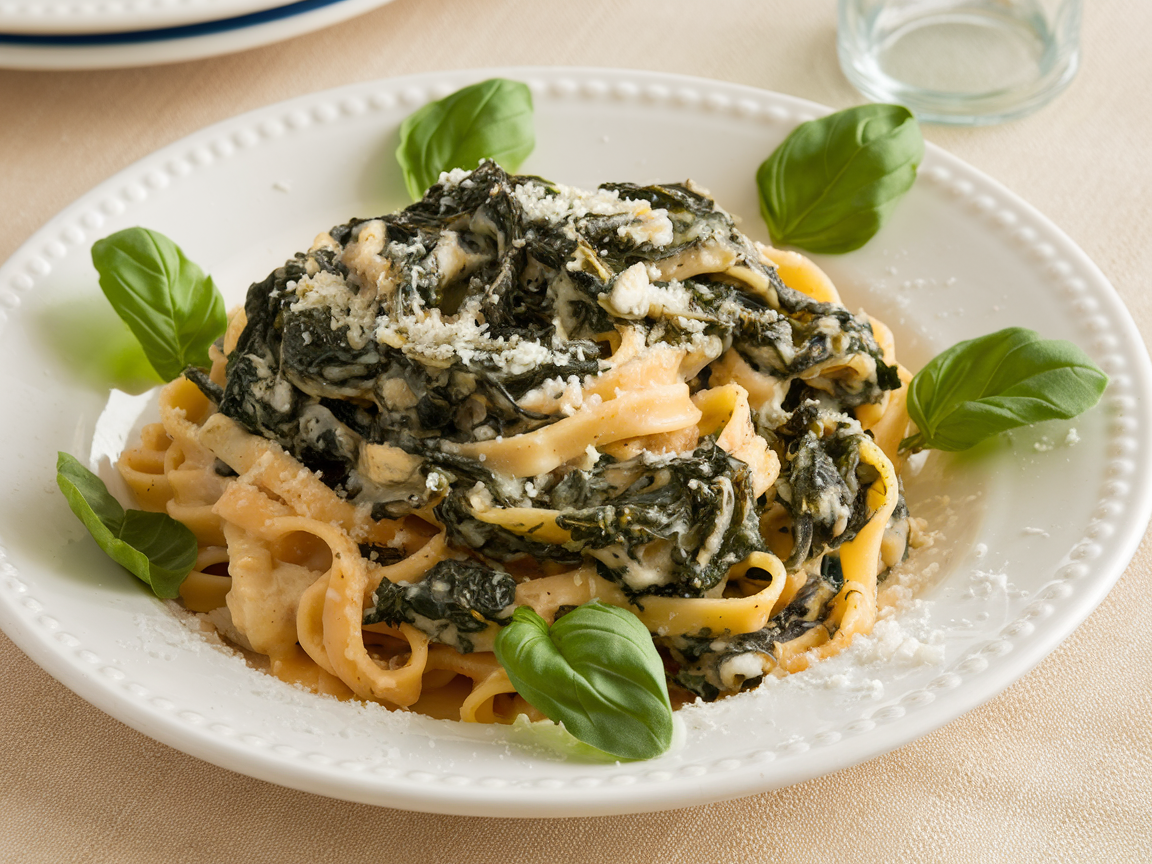
Spinach and ricotta pasta is a creamy, vegetarian Italian dish combining tender pasta, fresh spinach, and silky ricotta cheese into one satisfying meal. This Italian comfort food delivers restaurant-quality results in under 30 minutes using just five simple ingredients. The combination of leafy greens and cheese creates natural creaminess without heavy cream, making this one of the most versatile ricotta cheese recipes in modern cooking.
Table of Contents
| Metric | Value |
|---|---|
| Prep Time | 10 minutes |
| Cook Time | 15 minutes |
| Total Time | 25 minutes |
| Servings | 2 |
| Difficulty | Easy |
| Cuisine | Italian |

Why This Recipe Works
I’ve made this spinach ricotta pasta countless times, and it never disappoints because the technique is foolproof. The sautéed garlic infuses the entire dish with aromatic depth while the spinach wilts into tender strands that distribute evenly throughout. Reserved pasta water becomes your secret weapon here, as its starch creates a glossy, luxurious sauce that clings perfectly to each strand without requiring any cream.
What makes this a true creamy pasta dish is how ricotta cheese transforms when tossed with hot pasta and pasta water. The gentle heat softens the cheese into a silky coating rather than chunky bits. This method mirrors traditional Italian preparation, where the pasta’s heat does the cooking rather than separately preparing a heavy sauce.
The beauty of this recipe lies in its simplicity and adaptability. Whether you’re creating a quick weeknight dinner or building a more elaborate baked spinach pasta casserole, this same filling and technique forms the foundation for success.
Ingredients
| Ingredient | Quantity | Notes with Alternatives |
|---|---|---|
| Pasta | 300g | Use penne, fettuccine, or any shape. Whole wheat pasta adds nuttiness; gluten-free works equally well. |
| Ricotta Cheese | 150g | Full-fat ricotta creates creamier results. Substitute with mascarpone (use 100g) or whipped goat cheese for tang. |
| Fresh Spinach | 2 cups | Baby spinach wilts faster; mature spinach has bolder flavor. Swap for arugula or Swiss chard if preferred. |
| Garlic Cloves | 2 | Minced or thinly sliced. Add more for stronger flavor; reduce for milder taste. |
| Olive Oil | 1 tbsp | Extra-virgin olive oil adds fruitiness. Use butter for richness or a blend of both. |
| Salt and Pepper | To taste | Reserve pasta cooking water before draining; season generously at the end. |

Step-by-Step Instructions
Preparing the Pasta Base
- Cook pasta in salted boiling water according to package directions until al dente, approximately 10 to 12 minutes.
- Reserve one cup of pasta water before draining the pasta completely.
- Return the drained pasta to the empty pot off heat.
Building the Spinach Ricotta Sauce
- Heat olive oil in a large skillet over medium heat for approximately 1 minute.
- Add minced garlic cloves and sauté for 30 seconds until fragrant.
- Add fresh spinach in batches, stirring continuously until completely wilted, about 3 to 4 minutes.
- Reduce heat to low and add ricotta cheese to the spinach mixture.
- Stir gently for 2 minutes until ricotta combines with the spinach into a creamy consistency.
Combining and Finishing
- Transfer the spinach ricotta mixture to the pot with cooked pasta.
- Toss continuously, adding pasta water gradually until the desired creaminess is achieved.
- Season generously with salt and freshly ground black pepper to taste.
- Serve immediately while hot in warm bowls.

Chef Tips for Perfect Results
- Use full-fat ricotta cheese for maximum creaminess; low-fat versions can result in a grainy texture that requires more pasta water adjustment.
- Reserve pasta water before draining because its starch content emulsifies with ricotta, creating authentic Italian sauce without cream.
- Add ricotta to the skillet off heat or at very low temperatures to prevent it from becoming grainy or separating.
- Taste and season only after combining all components because ricotta and pasta water will distribute salt unevenly if added too early.
- Work quickly once combining the pasta with the sauce because residual heat continues cooking; serving immediately preserves optimal texture.
- Toast a handful of pine nuts separately and sprinkle over finished pasta for nutty texture contrast with creamy cheese.
Common Mistakes to Avoid
Using Low-Fat Ricotta
Low-fat ricotta contains less fat and more water, causing it to separate when heated rather than creating a smooth sauce. Always use full-fat ricotta cheese to achieve the signature creamy consistency this dish requires.
Draining Pasta Completely Without Reserving Water
Pasta water contains starches that emulsify the sauce, creating silky texture without cream. Reserve at least one cup before draining because adding regular water produces a thinner, less cohesive sauce.
Cooking Ricotta on High Heat
High heat causes ricotta to break down into grainy, separated curds that ruin the creamy texture. Keep the skillet at low heat when combining ricotta with spinach, and always add ricotta to cooler ingredients rather than hot ones.
Over-Wilting Spinach
Cooking spinach too long darkens it and concentrates mineral flavors unpleasantly. Wilt spinach just until tender, approximately 3 to 4 minutes, maintaining its bright green color and fresh taste.
Insufficient Seasoning
Ricotta is mild and absorbs salt without becoming overly salty, so generous seasoning is necessary. Taste after combining all elements and add additional salt and pepper freely; under-seasoning results in bland, flat flavor.
Variations and Substitutions
| Ingredient | Substitution | Impact on Flavor |
|---|---|---|
| Ricotta Cheese | Mascarpone or Goat Cheese | Mascarpone adds richness; goat cheese brings tanginess and requires less quantity (100g). |
| Fresh Spinach | Arugula or Swiss Chard | Arugula adds peppery bite; chard contributes earthiness and requires slightly longer wilting time. |
| Pasta Shape | Penne, Shells, or Fusilli | Tube shapes like penne capture sauce inside; shapes like shells hold sauce in crevices for creamier bites. |
| Olive Oil | Butter or Brown Butter | Butter creates richer flavor; brown butter adds nutty complexity. |
| Plain Recipe | Baked Version with Mozzarella | Creates baked spinach pasta casserole; add egg to filling and top with mozzarella before baking at 375°F for 25 minutes. |
| Plain Recipe | Homemade Ravioli Filling | Use spinach ricotta filling mixture as homemade ravioli stuffing; combination yields approximately 24 ravioli. |

Serving Suggestions and Pairings
Serve this spinach ricotta pasta as a main course paired with a crisp Sauvignon Blanc or light Pinot Grigio. The acidity in white wine cuts through the richness of ricotta while complementing fresh spinach notes perfectly.
For entertaining, pair this dish with garlic bread and a simple arugula salad dressed with lemon vinaigrette. The peppery salad provides textural contrast and refreshing brightness against creamy pasta.
This vegetarian pasta meal works beautifully for casual weeknight dinners or elegant dinner parties. Add grilled chicken breast on top for protein-forward presentations, or serve alongside roasted vegetables like cherry tomatoes and zucchini.
For brunch occasions, serve this fresh spinach dish at room temperature as a salad component, or warm slightly and portion into individual ramekins for plated presentations.
Storage and Reheating
| Method | Duration | Instructions |
|---|---|---|
| Refrigerator | 3 days | Cool completely, transfer to airtight container. Reheat gently over low heat, adding pasta water or broth to restore creaminess. |
| Freezer | 1 month | Freeze in freezer-safe containers before adding cheese mixture. Thaw overnight in refrigerator, then reheat gently on stovetop with added liquid. |
| Microwave | Not recommended | Microwave heating causes ricotta to separate and sauce to break. Use stovetop reheating instead for best results. |
| Make-Ahead Components | 2 days | Prepare spinach ricotta mixture separately; refrigerate covered. Combine with freshly cooked hot pasta just before serving for optimal texture. |
Nutritional Information
Approximate values per serving (based on 2 servings):
| Nutrient | Amount per Serving |
|---|---|
| Calories | 520 |
| Protein | 18g |
| Fat | 12g |
| Carbohydrates | 78g |
| Fiber | 3g |
| Sugar | 2g |
| Sodium | 285mg |
Note: Values are approximate and vary based on specific ingredient brands and portion sizes used.
Frequently Asked Questions
Can I make spinach and ricotta pasta ahead of time?
Yes, you can prepare the spinach ricotta filling up to two days in advance and refrigerate it separately from the pasta. Cook fresh pasta just before serving, then combine the two components while the pasta is hot to achieve optimal creaminess. This approach works perfectly for meal preparation and entertaining situations.
How do I know when the spinach is perfectly wilted?
Spinach reaches perfect tenderness in three to four minutes when it transforms from bright green to darker, more tender leaves without becoming mushy or discolored. The leaves should be completely softened and easily crushed between your fingers, but retain their vibrant color.
What if my sauce is too thick or too thin?
If your sauce is too thick, add reserved pasta water one tablespoon at a time while stirring constantly until reaching desired consistency. If your sauce is too thin, let the dish rest off heat for two minutes as residual heat thickens the sauce, or add slightly more ricotta cheese when combining components.
Can I use frozen spinach instead of fresh?
You can use frozen spinach, but thaw it completely and squeeze out all excess moisture beforehand because frozen spinach contains far more water than fresh varieties. Use approximately 1 cup thawed frozen spinach in place of the fresh spinach measurement to avoid making your sauce watery.
How do I prevent ricotta from becoming grainy?
Keep your skillet temperature low when adding and mixing ricotta cheese, never exceeding medium-low heat. Add ricotta to cooler ingredients rather than to a hot pan, and stir gently for just two minutes. Using full-fat ricotta and avoiding high temperatures ensures a smooth, creamy texture every time.
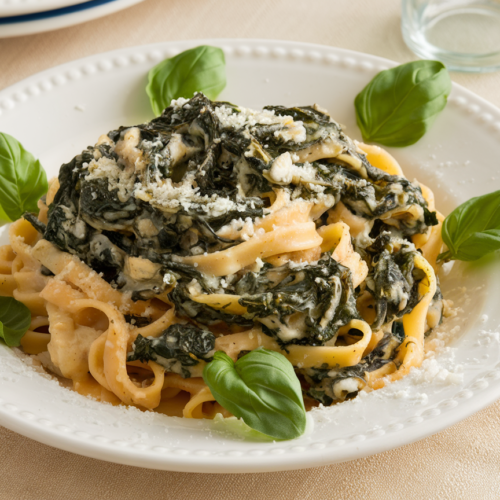
Spinach and Ricotta Pasta
Equipment
- Large Pot
- Skillet
- Colander
Ingredients
Main Ingredients
- 300 g pasta
- 150 g ricotta cheese full-fat preferred
- 2 cups fresh spinach
- 2 garlic cloves minced
- 1 tbsp olive oil extra virgin
- salt to taste
- black pepper to taste
Instructions
- Cook pasta in salted boiling water until al dente. Reserve 1 cup pasta water, then drain.
- Heat olive oil in a skillet over medium heat. Add garlic and sauté for about 30 seconds until fragrant.
- Add spinach and cook until wilted, about 3 to 4 minutes.
- Reduce heat to low and stir in ricotta cheese until creamy.
- Add cooked pasta to the skillet and toss to combine.
- Add reserved pasta water gradually until the sauce reaches a silky consistency.
- Season with salt and black pepper, then serve immediately.
Notes
Conclusion
Spinach and ricotta pasta delivers authentic Italian comfort food with minimal effort and maximum flavor. This vegetarian pasta meal combines fresh spinach, creamy ricotta, and simple pantry staples into a restaurant-quality dish ready in under 30 minutes. Master this recipe’s core technique and you’ll create countless variations including homemade ravioli and baked casseroles. The signature combination of tender pasta coated in silky cheese sauce guarantees satisfaction every single time.