

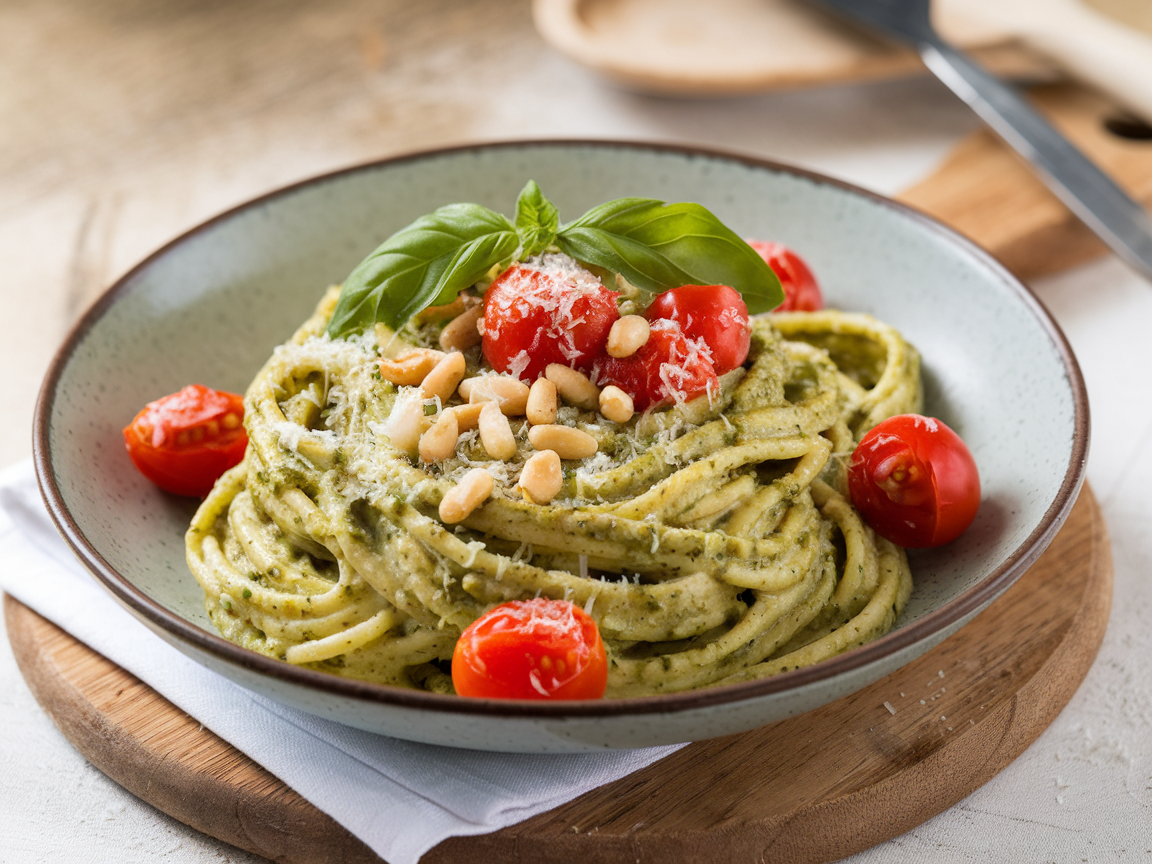
Pesto pasta is a vibrant Italian dish that combines tender pasta with a fresh basil pasta sauce made from just a handful of quality ingredients. This authentic pesto sauce preparation requires no cooking, delivering bright, herbaceous flavor in minutes. The simplicity of this fresh herb pasta dish makes it perfect for weeknight dinners and impressive enough for entertaining guests.
Table of Contents
| Prep Time | Cook Time | Total Time | Servings | Difficulty | Cuisine |
|---|---|---|---|---|---|
| 10 minutes | 12 minutes | 22 minutes | 2 servings | Easy | Italian |
Why This Recipe Works
I have prepared countless pasta dishes throughout my culinary journey, and homemade pesto recipe variations consistently deliver the most memorable results. The magic lies in using fresh ingredients without lengthy cooking that diminishes delicate herb flavors. When you combine hot pasta with cold pesto, the residual heat gently warms the sauce while preserving its vibrant character.
The technique of mixing pesto with olive oil before tossing with pasta ensures even distribution throughout every strand. This method prevents clumping and guarantees that each bite contains balanced flavor. The Parmesan cheese adds umami depth that complements the fresh basil without overwhelming the palate.
I have found that this straightforward approach outperforms complicated recipes involving cream or butter because it honors the pesto’s authentic simplicity. The result is a traditional basil pesto dish that tastes restaurant-quality despite minimal effort.
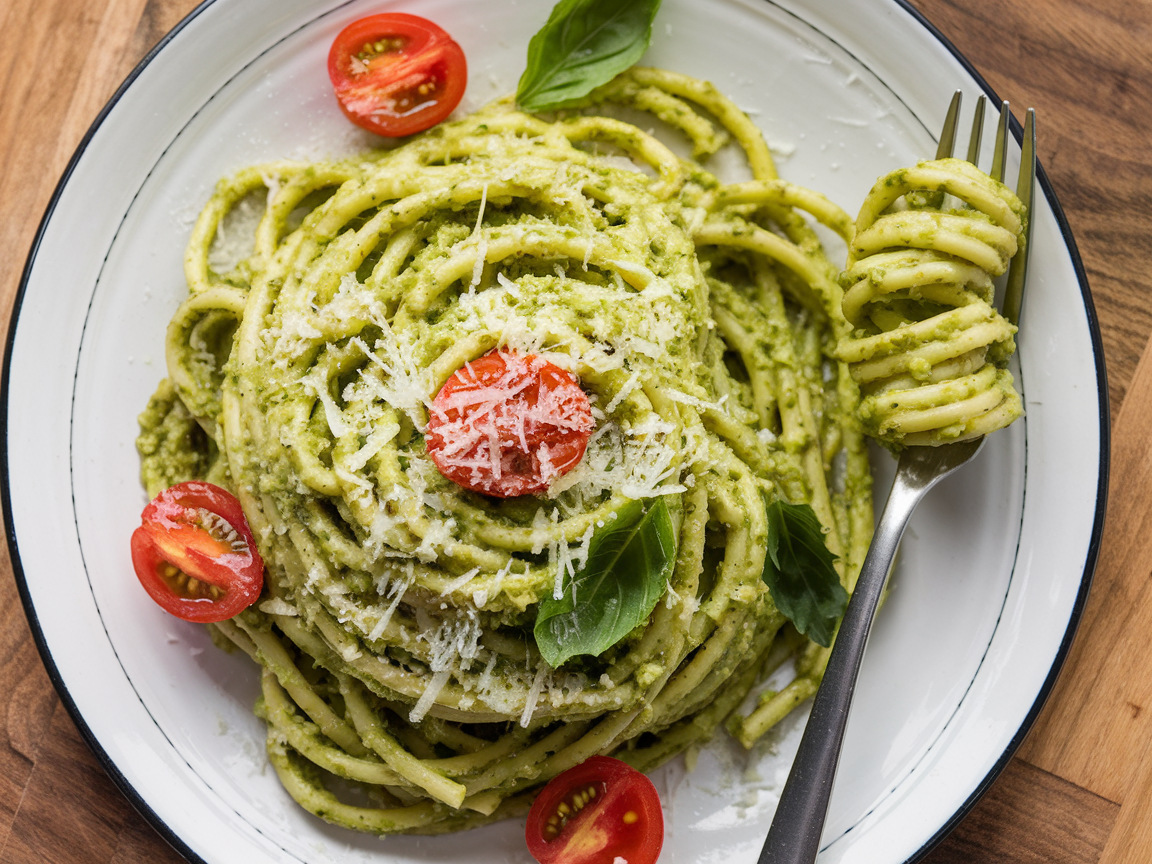
Ingredients
| Ingredient | Quantity | Notes & Alternatives |
|---|---|---|
| Pasta | 300g | Use linguine, penne, or fusilli. Whole wheat pasta works well for added nutrition. |
| Pesto Sauce | ½ cup | For fresh pesto from scratch, blend 2 cups fresh basil, 3 tbsp pine nuts, 3 cloves garlic, ½ cup Parmesan, and ½ cup olive oil. |
| Olive Oil | 2 tbsp | Extra-virgin provides superior flavor. Use high-quality oil for optimal results. |
| Parmesan Cheese | ¼ cup | Freshly grated Parmigiano-Reggiano recommended. Pre-grated contains anti-caking agents that affect texture. |
Step-by-Step Instructions
Preparation Phase
- Bring a large pot of salted water to a rolling boil over high heat.
- Prepare your basil pesto ingredients if making pesto from scratch, or measure your prepared sauce into a small bowl.
- Have your pasta, olive oil, and Parmesan ready before cooking begins for smooth execution.
Cooking Phase
- Add 300g pasta to boiling water and stir immediately to prevent sticking.
- Cook according to package directions, typically 9-12 minutes, until al dente with slight resistance when bitten.
- Reserve ½ cup pasta cooking water before draining to adjust sauce consistency if needed.
- Drain pasta in a colander but do not rinse, as starch helps the sauce adhere.
Sauce Assembly Phase
- Whisk the ½ cup pesto sauce with 2 tbsp olive oil in a large serving bowl.
- Add the hot drained pasta immediately to the pesto mixture for optimal temperature.
- Toss vigorously for 1-2 minutes using pasta tongs, coating all strands evenly with the authentic pesto sauce.
- Add 1-2 tablespoons reserved pasta water if the mixture appears too thick or dry.
- Top with ¼ cup freshly grated Parmesan cheese and toss once more.
- Serve immediately while the pasta retains maximum warmth and the pesto fragrance remains pronounced.
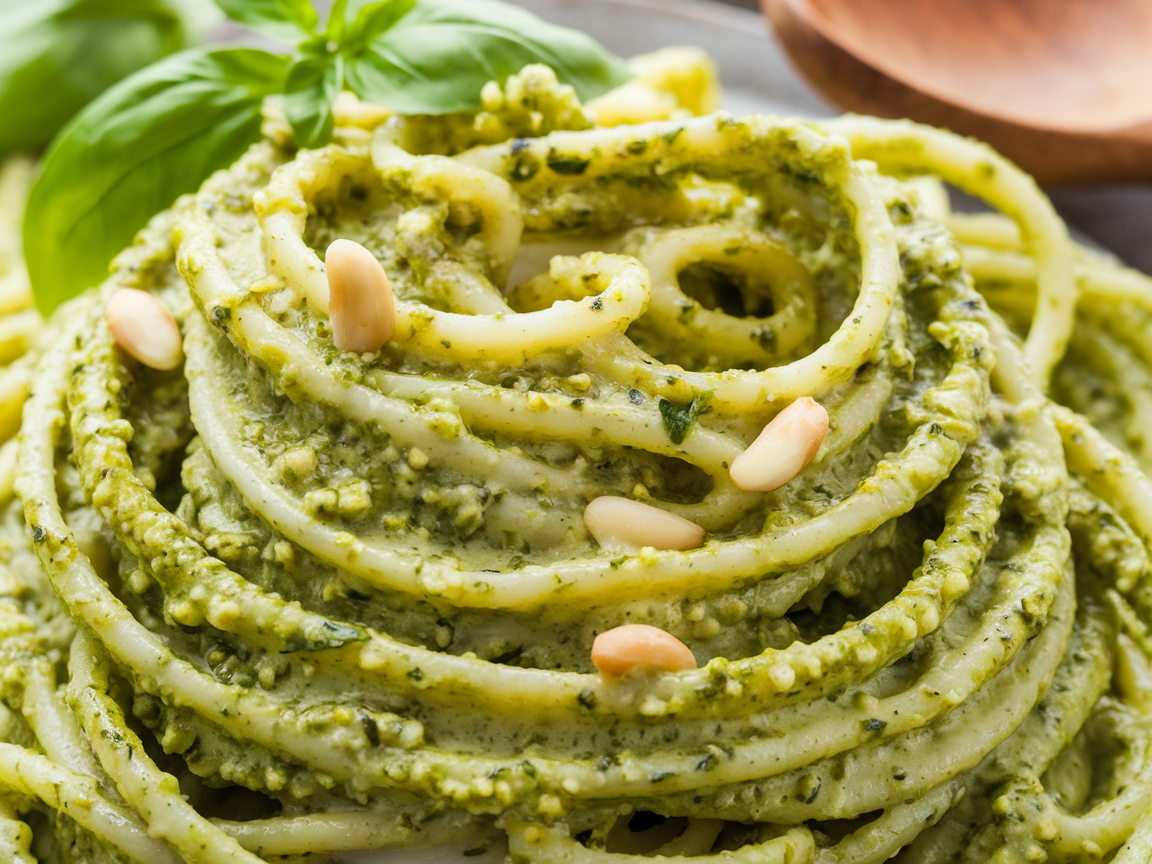
Chef Tips for Perfect Results
- Temperature control matters: Combine hot pasta with room-temperature pesto for optimal flavor development without destroying delicate basil oils through excessive heat.
- Use fresh basil exclusively: Dried basil produces muddy flavor unsuitable for this fresh basil pasta sauce. Purchase bright green leaves without browning or wilting.
- Grate Parmesan fresh: Block cheese grated immediately before use delivers superior melting and flavor compared to pre-grated alternatives containing cellulose.
- Don’t overcook pasta: Al dente texture with slight firmness ensures the noodles maintain structural integrity while absorbing pesto without becoming mushy.
- Reserve pasta water strategically: This starch-rich liquid adjusts sauce consistency perfectly and helps distribute pesto more evenly across all pasta surfaces.
- Mix pesto with oil first: This step prevents the concentrated paste from clumping when it meets hot pasta, ensuring even distribution throughout the dish.
Common Mistakes to Avoid
Mistake 1: Adding pesto directly to boiling pasta water. This ruins the pesto’s fresh flavor through excessive heat and dilutes its concentrated taste. Instead, combine pesto with drained hot pasta off the heat for preservation of delicate herb characteristics essential to how to make pesto successfully.
Mistake 2: Using pre-made pesto without thinning. Commercial pesto concentrates are thicker than fresh versions and require oil thinning. Mix with 2 tablespoons olive oil to achieve proper consistency that coats pasta evenly without clumping.
Mistake 3: Rinsing the cooked pasta. This removes vital starch that helps pesto adhere to noodle surfaces, resulting in oily pasta with separated sauce. Retain the starchy cooking water for consistency adjustment instead.
Mistake 4: Overcooking the pasta. Soft, mushy pasta cannot support the delicate sauce properly and creates an unpleasant texture. Cook exactly to al dente specification by tasting at minimum time on package directions.
Mistake 5: Adding cheese before tossing. Grating Parmesan over mixed pasta prevents thorough incorporation of its nutty flavor and creates uneven distribution. Toss pasta and pesto first, then top with cheese for final presentation.

Variations and Substitutions
| Ingredient | Substitution | Impact on Flavor |
|---|---|---|
| Basil | Arugula or spinach | Creates peppery or earthy notes replacing basil’s sweet anise undertones; produces darker green color. |
| Pine Nuts | Walnuts or almonds | Walnuts add deeper, slightly bitter earthiness; almonds provide milder nuttiness without pine’s buttery quality. |
| Parmesan | Pecorino Romano | Delivers sharper, more aggressive salty flavor with less creamy texture than Parmigiano-Reggiano. |
| Olive Oil | Walnut or hazelnut oil | Infuses nutty, toasted complexity replacing olive oil’s fruity and peppery characteristics. |
| Garlic | Roasted garlic cloves | Softens pesto’s sharp bite with sweet, caramelized depth suitable for those preferring milder garlic intensity. |
| Pasta Shape | Gnocchi or ravioli | Gnocchi absorbs sauce differently creating heartier dish; ravioli adds richness if filled with cheese or meat. |
Serving Suggestions and Pairings
Serve pesto pasta as the centerpiece of light summer dinners alongside a crisp Sauvignon Blanc or Pinot Grigio that complements the fresh herb profile without competing. Pair with a simple green salad dressed in lemon vinaigrette to provide textural contrast and prevent palate fatigue.
This pesto pasta dish shines as a side course at garden parties, casual outdoor gatherings, and intimate family meals. Serve immediately after preparation while the pasta retains optimal temperature and the pesto maintains its vibrant color.
Add grilled chicken breast, seared shrimp, or roasted cherry tomatoes for protein-forward variations suitable for main courses. Fresh mozzarella cheese or burrata elevates the dish for special occasions while maintaining the light, fresh character.
Storage and Reheating
| Method | Duration | Instructions |
|---|---|---|
| Refrigeration (Combined) | 1-2 days | Store mixed pasta in airtight container; pesto oxidizes and darkens over time affecting appearance and flavor. |
| Refrigeration (Separate) | 3-4 days | Store pesto and cooked pasta separately to maintain freshness; combine when ready to serve. |
| Freezing (Pesto Only) | 3 months | Freeze pesto in ice cube trays for portioned servings; thaw at room temperature before combining with fresh pasta. |
| Reheating | Minimal | Gently warm in microwave in 30-second intervals, stirring between, or reheat over low heat on stovetop with splash of reserved pasta water. |
Nutritional Information
Approximate values per serving (based on 2 servings):
| Nutrient | Amount per Serving |
|---|---|
| Calories | 485 |
| Protein | 16g |
| Fat | 22g |
| Carbohydrates | 58g |
| Fiber | 2g |
| Sugar | 1g |
| Sodium | 380mg |
Frequently Asked Questions
Can I make pesto pasta without fresh basil?
You cannot achieve authentic pesto flavor without fresh basil because dried basil lacks the volatile oils that provide the signature bright, herbaceous taste. Fresh basil must remain the primary ingredient for this Italian pesto preparation to succeed. However, you may substitute arugula, spinach, or cilantro to create alternative fresh herb pasta versions with different flavor profiles.
How do I know when the pasta is perfectly al dente?
The pasta is al dente when it has slight resistance when bitten but no hard chalky center remaining. Begin testing 1-2 minutes before the package’s maximum recommended time to catch the ideal moment. The best way to verify doneness is regular tasting throughout the final cooking minutes.
Why is my pesto separating from the pasta?
Pesto separates when insufficient starch binds the sauce to noodle surfaces, typically caused by rinsing cooked pasta. You must skip rinsing and use reserved pasta water to adjust consistency instead. If separation has already occurred, add 1-2 tablespoons of reserved pasta water and toss vigorously to reincorporate.
Can I prepare pesto pasta ahead for a dinner party?
You should prepare pesto and pasta separately, storing each in the refrigerator until service time. Combine them 15 minutes before serving to prevent pesto oxidation that darkens color and dulls flavor. This approach maintains the fresh character essential to creamy pesto pasta and other pesto dishes.
What is the best way to make fresh pesto from scratch at home?
Blend 2 cups fresh basil leaves, 3 tablespoons toasted pine nuts, 3 cloves minced garlic, ½ cup grated Parmigiano-Reggiano, and ½ cup extra-virgin olive oil until reaching desired consistency. Add salt and pepper to taste, then use immediately or store in refrigerator. This pesto sauce techniques method preserves the herbs’ fresh flavor better than food processors that generate excessive heat.
Pesto Pasta
Equipment
- Large Pot
- Colander
- Mixing Bowl
Ingredients
Pasta
- 300 g pasta linguine, penne, or fusilli
Pesto Sauce
- 1/2 cup pesto sauce homemade or store-bought
- 2 tbsp olive oil extra virgin
- 1/4 cup Parmesan cheese freshly grated
Instructions
- Bring a large pot of salted water to a rolling boil and cook pasta according to package directions until al dente.
- Reserve 1/2 cup of pasta water, then drain the pasta without rinsing.
- In a large bowl, whisk pesto sauce with olive oil until smooth.
- Add hot pasta to the pesto mixture and toss thoroughly to coat evenly.
- Add 1–2 tablespoons reserved pasta water if needed to loosen the sauce.
- Top with freshly grated Parmesan cheese, toss lightly, and serve immediately.
Notes
Conclusion
Pesto pasta represents the pinnacle of Italian simplicity, delivering restaurant-quality results with minimal ingredients and effort. This fresh pesto from scratch approach ensures vibrant color and authentic flavor that pre-made versions cannot match. Master this foundational technique to create countless variations throughout the seasons, always capturing that signature bright, herbaceous character that defines true pesto.