

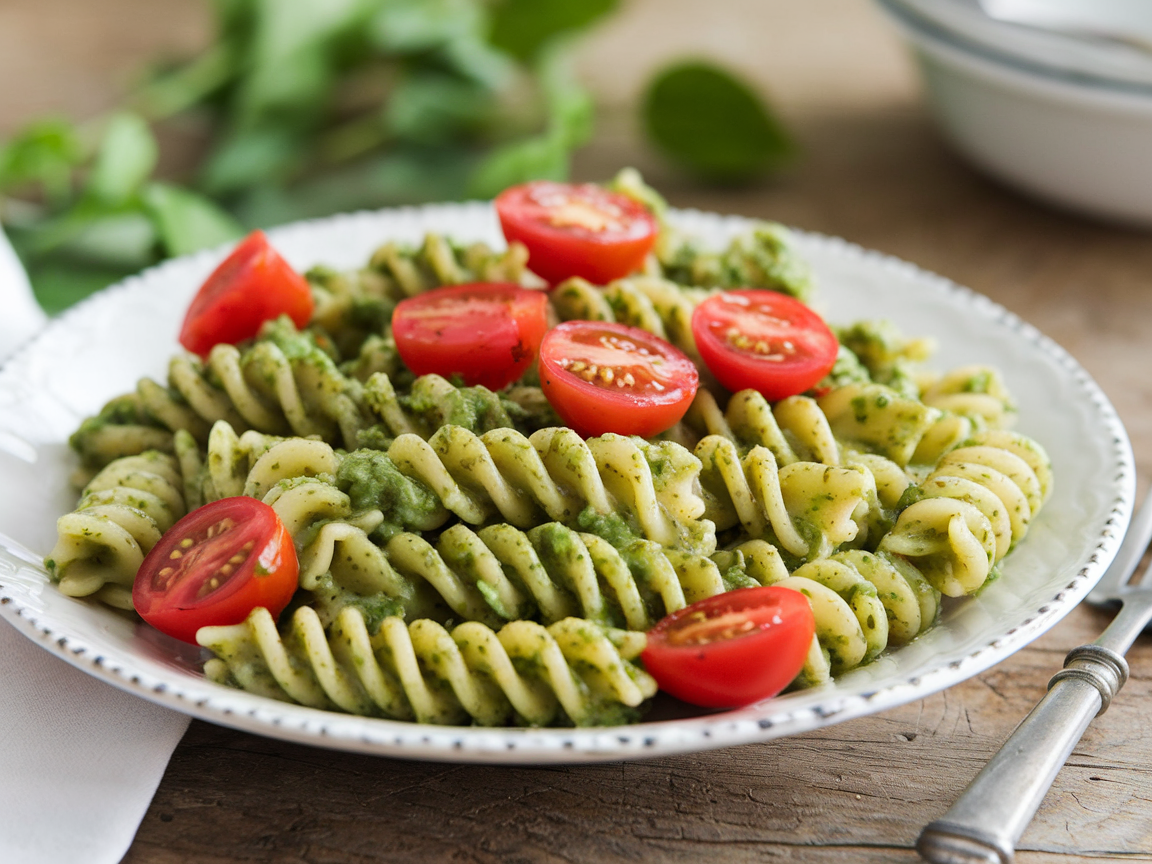
Spring pesto pasta with cherry tomatoes is a vibrant, garden-fresh Italian dish that celebrates seasonal ingredients at their peak. This homemade pesto sauce combines fresh basil, pine nuts, garlic, and Parmesan into a silky coating for tender fusilli pasta. Sweet halved cherry tomatoes add bursts of juicy flavor that perfectly complement the herbal richness of the pesto.
| Detail | Value |
|---|---|
| Prep Time | 15 minutes |
| Cook Time | 12 minutes |
| Total Time | 27 minutes |
| Servings | 4 people |
| Difficulty | Easy |
| Cuisine | Italian |
Why This Recipe Works
I’ve made this light spring pasta recipe dozens of times, and it never disappoints. The combination of fresh basil pasta and cherry tomato basil sauce creates a naturally balanced dish that requires minimal cooking skills. Fresh herb pasta recipes like this one deliver maximum flavor with zero pretense.
What makes this seasonal pasta dish truly special is the contrast between the warm, silky pesto and the cool, juicy tomatoes added at the end. The pesto clings beautifully to each strand of fusilli, while the cherry tomatoes burst with sweetness when you bite into them. This garden fresh pesto approach means you’re building layers of flavor rather than masking ingredients with heavy cream.
The beauty of this easy pesto pasta lies in its simplicity and reliance on quality ingredients. When you use fresh, peak-season basil from your garden or farmers market, you need nothing else to create something restaurant-worthy. This spring vegetable pasta exemplifies how simple cooking technique combined with excellent ingredients produces extraordinary results.
Ingredients
| Ingredient | Quantity | Notes and Alternatives |
|---|---|---|
| Fusilli pasta | 400g | Use high-quality bronze-cut pasta; linguine or penne work well as alternatives |
| Fresh basil leaves | 2 cups | Must be fresh and vibrant; Genovese basil is traditional but any sweet basil works |
| Pine nuts | ¼ cup | Toast lightly before blending; walnuts or almonds substitute well |
| Garlic cloves | 2 | Fresh garlic only; minced finely for even distribution |
| Olive oil | ½ cup | Use extra virgin quality; this is not a place to compromise |
| Parmesan cheese, grated | ½ cup | Freshly grated from a block; pre-grated loses flavor and texture |
| Cherry tomatoes, halved | 1 cup | Choose ripe, colorful tomatoes; heirloom varieties add visual interest |
| Salt | To taste | Kosher salt for better distribution and control |
| Black pepper | To taste | Freshly ground pepper delivers superior flavor |
Step-by-Step Instructions
Prepare the Pasta
- Bring a large pot of salted water to a rolling boil over high heat.
- Add 400g fusilli pasta and cook according to package directions, stirring occasionally.
- Reserve 1 cup of pasta water before draining the cooked fusilli.
- Set the warm pasta aside in a large mixing bowl.
Make the Homemade Pesto Sauce
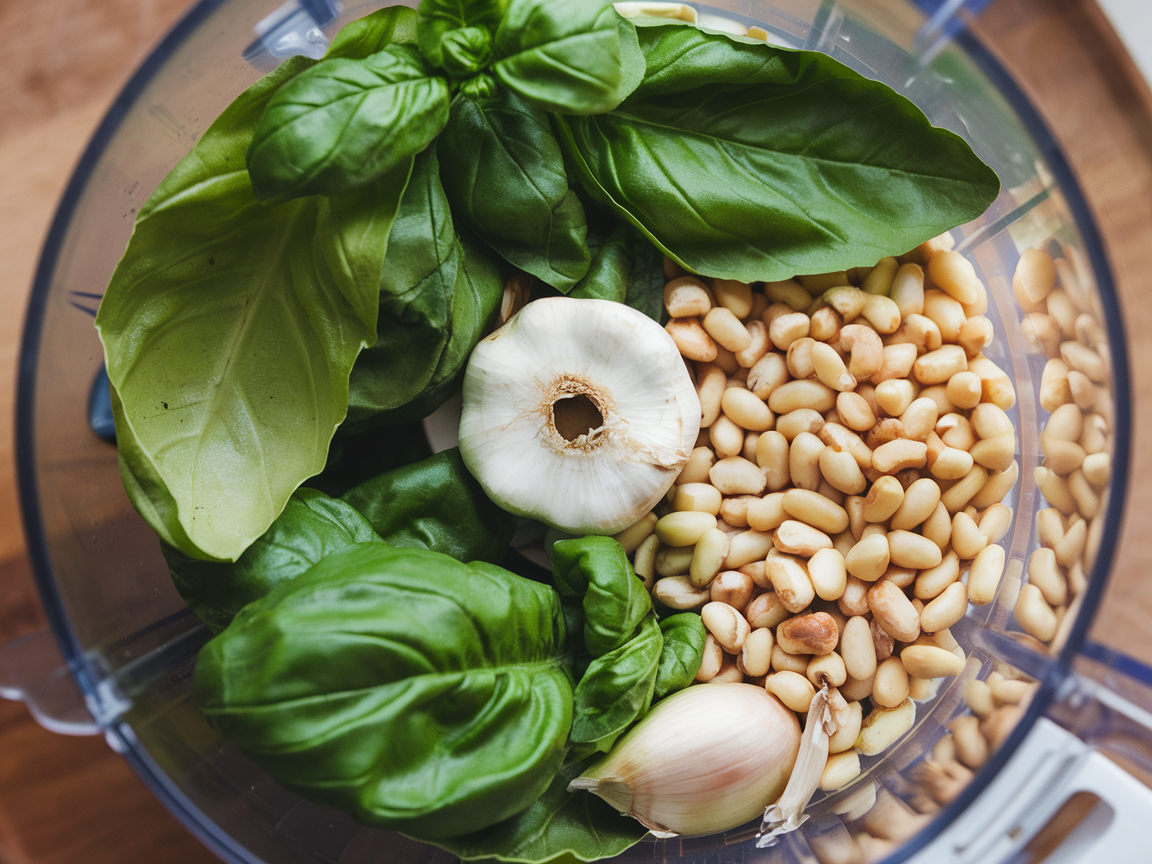
- Combine 2 cups fresh basil leaves, ¼ cup pine nuts, and 2 cloves garlic in a food processor.
- Pulse the mixture until coarsely chopped, about 5 to 8 pulses.
- Add ½ cup extra virgin olive oil in a slow stream while the processor runs.
- Blend until the pesto reaches a smooth but slightly textured consistency.
- Transfer the pesto to a large bowl and stir in ½ cup freshly grated Parmesan cheese.
- Season with salt and freshly ground black pepper to your preference.
Combine and Finish
- Add the warm pasta directly to the bowl containing the pesto sauce.
- Toss the pasta and pesto together vigorously until every strand is evenly coated.
- If the pesto seems too thick, add reserved pasta water one tablespoon at a time.
- Gently fold in 1 cup halved cherry tomatoes, preserving their shape.
- Serve the spring pesto pasta immediately on individual plates or a large platter.
Chef Tips for Perfect Results
- Toast pine nuts in a dry skillet for 2 to 3 minutes before adding to the food processor; this amplifies their nutty flavor and prevents a raw taste in your fresh basil pasta.
- Do not cook the pesto after blending; heat destroys the fresh herb pasta’s delicate basil flavor and turns it brown and bitter.
- Use pasta water to adjust pesto consistency rather than adding more oil; the starch helps the sauce cling to fusilli strands more effectively.
- Add the cherry tomatoes last and fold gently to prevent them from breaking apart and releasing excess liquid into the sauce.
- Serve immediately while the pasta is still warm; this cherry tomato pasta dish loses its textural contrast as it cools.
- Buy basil as close to serving time as possible; fresh basil deteriorates quickly and loses its potent herbal qualities within days.
Common Mistakes to Avoid
Overblending the pesto: A smooth pesto looks appealing but becomes dense and pasty. Pulse the ingredients until they reach a coarse-to-medium texture with visible flecks of basil and pine nuts. Overworked pesto oxidizes and develops a muddy, bitter flavor that dominates the entire dish.
Using wilted or stored basil: Basil that has been refrigerated for more than a few days loses its vibrant color and aromatic compounds. Always select bright green, crisp leaves from the farmers market or your garden the day you plan to cook. Wilted basil produces a dull, weak-flavored pesto that fails to shine.
Adding cold pasta to warm pesto: Cold pasta will cool the pesto and prevent it from adhering properly to each strand. Always reserve hot pasta water and add it to the warm bowl just before combining. The heat helps the pesto coat the pasta more evenly and develops the flavors.
Skipping the pasta water adjustment: Adding pesto directly to drained pasta without any liquid creates a thick, clumpy dish. Reserved starchy pasta water acts as an emulsifier and creates a silky sauce that clings to the fusilli. Add it gradually in small amounts to achieve the correct consistency.
Overcooking the cherry tomatoes: Adding tomatoes before serving or tossing them extensively causes them to split and leak juice. Fold the halved tomatoes in gently during the final moments of preparation. This preserves their burst of sweetness and provides textural contrast against the soft pasta.
Variations and Substitutions
| Ingredient | Substitution | Impact on Flavor |
|---|---|---|
| Pine nuts | Toasted walnuts or almonds | Creates a slightly earthier, less buttery taste while maintaining nutty richness |
| Fresh basil | Mix of basil and fresh spinach | Reduces herbal intensity and adds mild earthiness; great for pesto-sensitive palates |
| Cherry tomatoes | Sun-dried tomatoes (rehydrated) | Delivers concentrated, sweet-tart flavor; best used sparingly as they’re intense |
| Parmesan cheese | Pecorino Romano or aged Asiago | Pecorino adds saltiness and sharpness; Asiago provides nuttiness |
| Extra virgin olive oil | Regular olive oil or neutral oil | Reduces the peppery, fruity notes; the pesto becomes flatter and less distinctive |
| Fusilli pasta | Linguine, pappardelle, or gnocchi | Wider noodles hold more pesto; gnocchi creates a heavier, different dish entirely |
Serving Suggestions and Pairings
This cherry tomato pasta shines as a standalone lunch or light dinner during spring and summer months. Serve it alongside a crisp green salad with lemon vinaigrette to add freshness and balance the richness of the pesto. For a more substantial meal, pair the spring pesto pasta with grilled chicken breast or seared shrimp.
Pair this seasonal pasta dish with a chilled white wine such as Pinot Grigio or Sauvignon Blanc; the acidity cuts through the olive oil and highlights the basil. For special occasions, serve the spring vegetable pasta at garden parties, outdoor gatherings, or Easter celebrations. Add crusty focaccia or garlic bread to let guests soak up every drop of the herbal sauce.
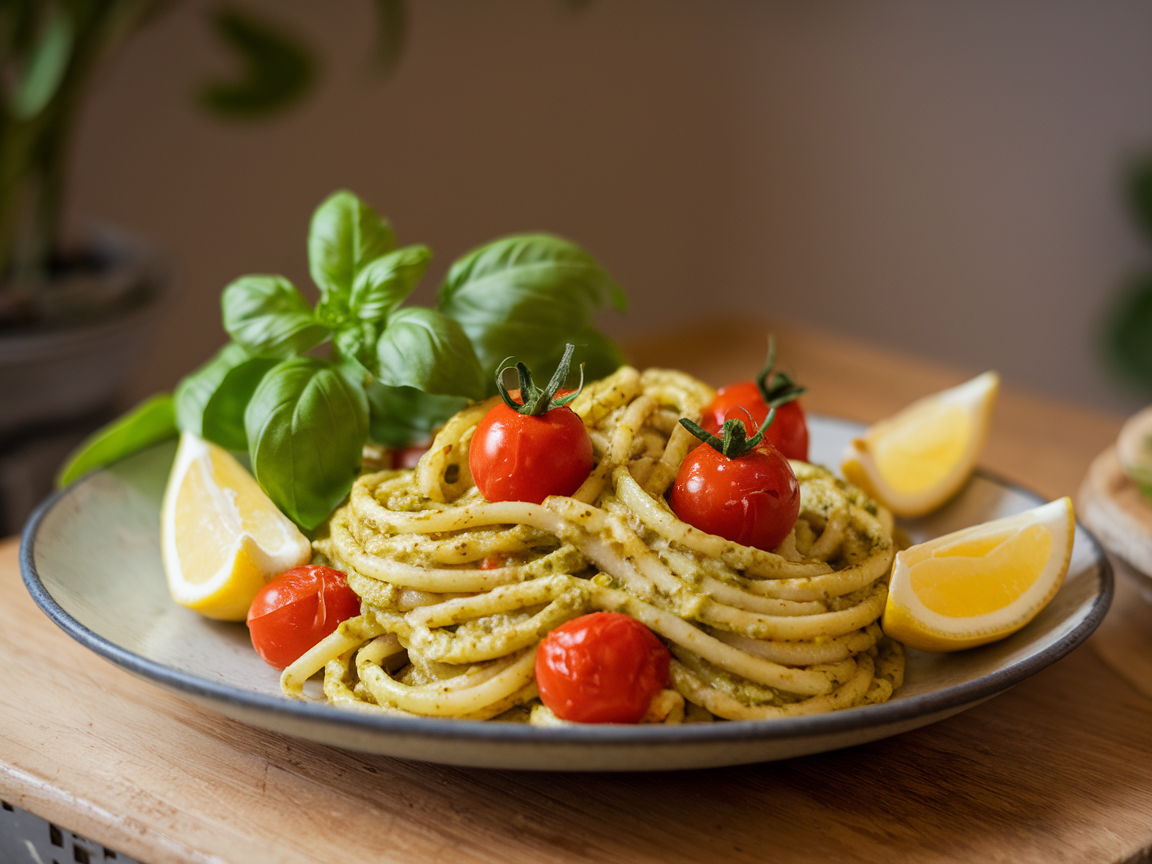
Offer fresh lemon wedges at the table; a squeeze of juice brightens the pesto and adds complexity. Freshly grated Parmesan cheese as a garnish allows guests to adjust the salty, umami notes to their preference. This tomato basil pasta works beautifully for meal prep, though best enjoyed fresh within a few hours of preparation.
Storage and Reheating
| Method | Duration | Instructions |
|---|---|---|
| Refrigerated storage | Up to 2 days | Transfer to an airtight container; the pesto will darken but remain safe to eat. Stir in additional olive oil before serving to restore creaminess. |
| Freezing (pesto only) | Up to 3 months | Freeze pesto in ice cube trays, then transfer cubes to a freezer bag; do not freeze assembled pasta as the texture suffers significantly. |
| Gentle reheating | 5-10 minutes | Place refrigerated pasta in a skillet over low heat with 1 to 2 tablespoons olive oil; toss constantly until warmed through. Do not use high heat, which causes basil to brown. |
| Cold serving | 2-3 hours | This fresh herb pasta recipe works well as a chilled pasta salad; remove from refrigerator 15 minutes before serving and drizzle with extra olive oil. |
Nutritional Information
Approximate values per serving (based on 4 servings):
| Nutrient | Amount per Serving |
|---|---|
| Calories | 620 |
| Protein | 18g |
| Fat | 38g |
| Carbohydrates | 56g |
| Fiber | 3g |
| Sugar | 2g |
| Sodium | 420mg |
Frequently Asked Questions
Can I make the pesto ahead of time for this spring pesto pasta recipe?
Yes, you can prepare the pesto up to 24 hours in advance and store it in an airtight container in the refrigerator. Press plastic wrap directly onto the pesto surface to prevent oxidation and browning. Cook the pasta fresh just before serving, then toss it with the stored pesto and add the cherry tomatoes.
What’s the best way to know when the fusilli pasta is done cooking?
Cook the pasta until it reaches an al dente texture, meaning tender but still firm to the bite. Taste a strand starting 1 minute before the package directions suggest doneness. The pasta should bend easily but retain a slight resistance when bitten; overcooked pasta becomes mushy and won’t support the pesto sauce effectively.
Why did my homemade pesto sauce turn brown, and how do I prevent this?
Browning occurs when basil is overblended, crushed too aggressively, or exposed to heat after blending. Keep the food processor running time short by pulsing in brief intervals rather than continuous blending. Never heat the finished pesto; always combine it with warm pasta rather than cooking it separately.
Can I prepare this cherry tomato pasta the night before and reheat it?
This dish is best served fresh, but you can prepare components separately the night before. Make the pesto and store it in the refrigerator; cook the pasta fresh the next day and combine them quickly. Add the cherry tomatoes just before serving to preserve their texture and bright appearance.
What if I don’t have pine nuts for this easy pesto pasta recipe?
Toasted walnuts, almonds, or sunflower seeds work well as substitutes with excellent results. Toast your chosen nut or seed in a dry skillet for 2 to 3 minutes before adding to the food processor. The final flavor will be slightly different but equally delicious and often more budget-friendly than using pine nuts.
Spring Pesto Pasta with Cherry Tomatoes
Equipment
- Large Pot
- Food Processor
- Mixing Bowl
Ingredients
Pasta
- 400 g fusilli pasta
Pesto Sauce
- 2 cups fresh basil leaves
- 1/4 cup pine nuts lightly toasted
- 2 garlic cloves
- 1/2 cup olive oil extra virgin
- 1/2 cup Parmesan cheese grated
- salt to taste
- black pepper to taste
Finishing
- 1 cup cherry tomatoes halved
Instructions
- Bring a large pot of salted water to a boil. Cook fusilli pasta until al dente. Reserve 1 cup pasta water, then drain.
- In a food processor, combine basil, pine nuts, and garlic. Pulse until coarsely chopped.
- Slowly add olive oil while blending until smooth but slightly textured.
- Transfer pesto to a bowl and stir in grated Parmesan cheese. Season with salt and pepper.
- Add warm pasta to the pesto and toss until evenly coated.
- Add reserved pasta water gradually to loosen the sauce if needed.
- Gently fold in halved cherry tomatoes.
- Serve immediately with extra Parmesan if desired.
Notes
Conclusion
Spring pesto pasta with cherry tomatoes represents the essence of seasonal cooking: simple ingredients at their peak, prepared with minimal fuss, delivering maximum flavor. This fresh basil pasta dish proves that excellent food doesn’t require complicated techniques or long ingredient lists. When you combine quality olive oil, vibrant basil, ripe cherry tomatoes, and freshly grated Parmesan with tender fusilli, you create something truly special. Make this spring vegetable pasta regularly during basil season and taste the difference that garden-fresh ingredients deliver to your table.
For more Italian pasta recipes or vegetarian dinner ideas, explore our complete recipe collection. Discover how fresh herbs transform simple dishes into restaurant-quality meals. Share this easy pesto pasta recipe with friends and family who appreciate the natural, herbal freshness of truly seasonal cooking.